
Currently our archives are not accessible for research due to archiving. However, you can still visit us our archive by booking a tour to still enjoy its history and capacity by contacting [email protected] for a tour. You can also visit and contribute to our online Digital Archive.
The Black Archives contains the following book collections:
The Digital Archive contains the following collections:
The Black Archives contains the following book collections:
- The Heilbron Collection
- The Huiswoud Collection
- The Willemsen Collection
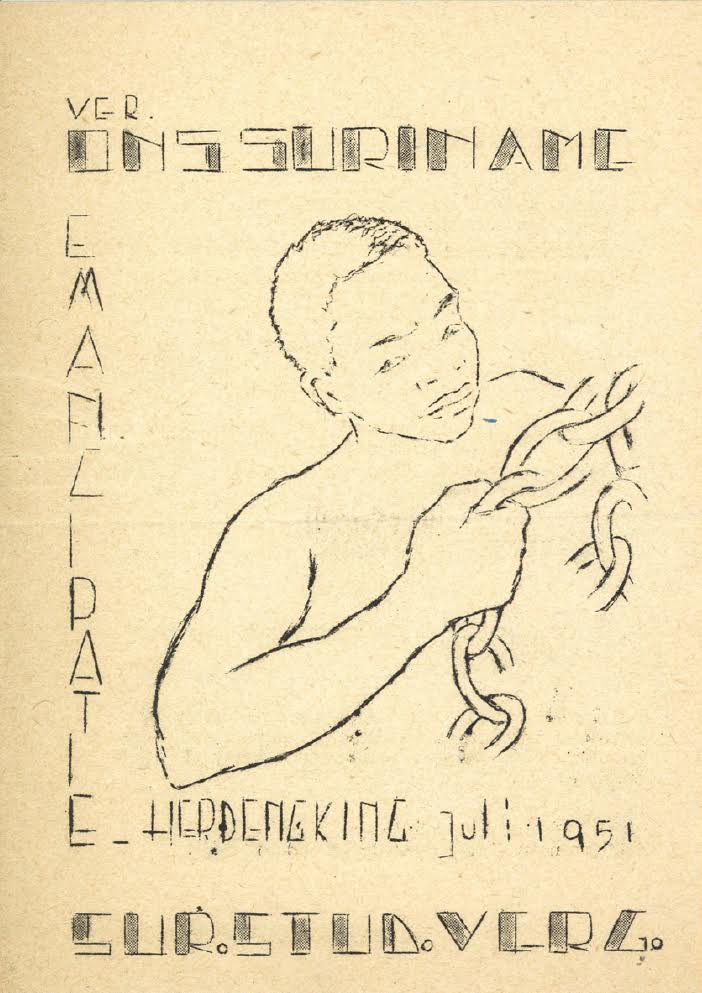
- Archives and book collection of Vereniging Ons Suriname
The Digital Archive contains the following collections:

The Heilbron Collection
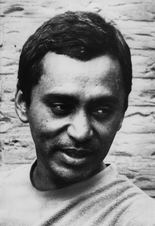
This bookcollection is the legacy of social scientist Waldo Heilbron who as a sociologist at the University of Amsterdam and studied post-colonialism, the Trans-Atlantic slave trade and its legacy; racism and historiography.
Heilbron had the mission to decolonize the historiography and social science by using alternative methodologies and critical perspectives. In "The Future of the Past: reflections on Dutch history of slavery and its legacy' (2006) he wrote:
"The trans-Atlantic slave trade and slavery left deep traces; in society and in the individual lives of many who are heirs of this history. In the public debate about the Dutch history of slavery, that rose at the end of the last century, it is this part of the history that is largely 'silenced past '. A lot of what is concealed is forgotten. (...) In deepening the knowledge about us ' concealed past ', new ways of thinking and research are needed."
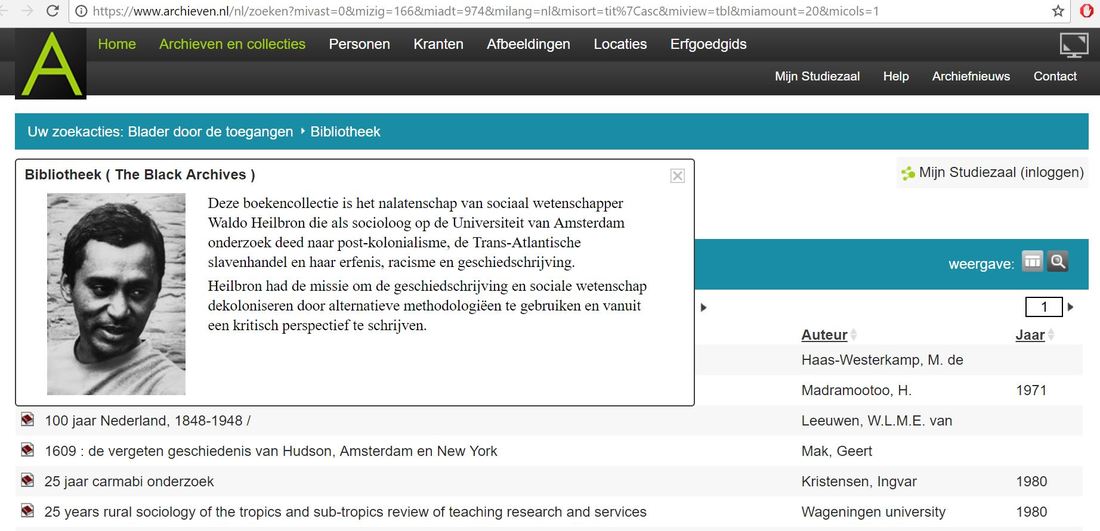
Search through the Heilbron Book collection via www.archieven.nl.
Heilbron had the mission to decolonize the historiography and social science by using alternative methodologies and critical perspectives. In "The Future of the Past: reflections on Dutch history of slavery and its legacy' (2006) he wrote:
"The trans-Atlantic slave trade and slavery left deep traces; in society and in the individual lives of many who are heirs of this history. In the public debate about the Dutch history of slavery, that rose at the end of the last century, it is this part of the history that is largely 'silenced past '. A lot of what is concealed is forgotten. (...) In deepening the knowledge about us ' concealed past ', new ways of thinking and research are needed."
Search through the Heilbron Book collection via www.archieven.nl.
The Huiswoud Collection
|
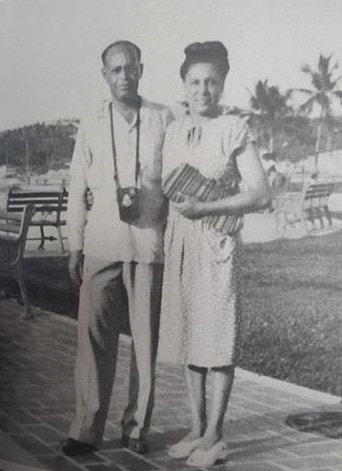
This book collection is the legacy of Otto and Hermine Huiswoud.
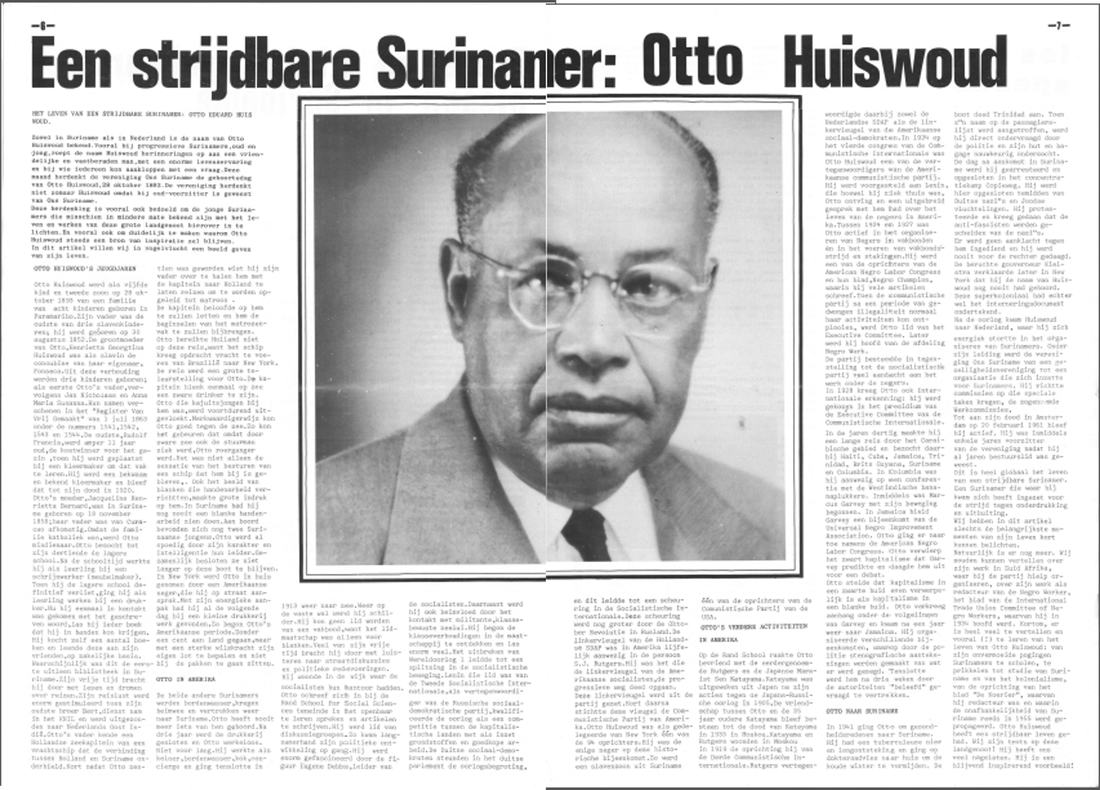
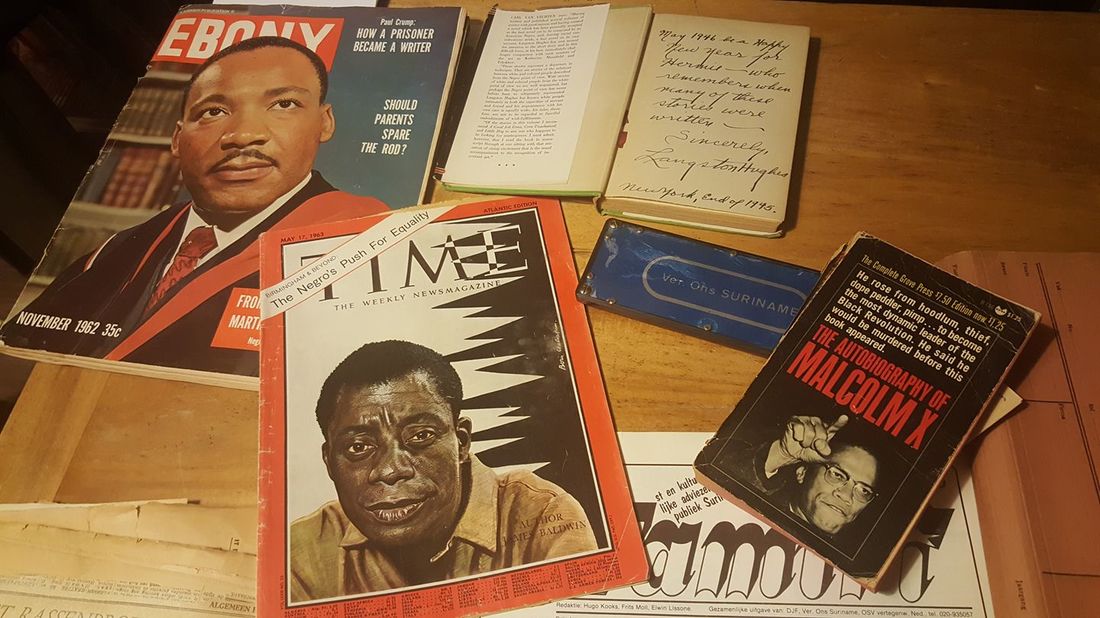
Upon his arrival in New York City as a 16-year-old boy, Otto Huiswoud came into contact with socialist and communist ideas. By historians, he is recognized as the first black member of the American Communist Party. He was involved in the early black civil-rights movement and travelled frequently to Moscow for the communist struggle. During his fight for equality and justice, he worked with Claude McKay and Langston Hughes, and was involved in debates with Marcus Garvey on the question of race, or race and class? After the second world war, Otto Huiswoud played as political activist a large role in his presidency in Verenging Ons Suriname in Amsterdam. His influence made Vereniging Ons Suriname a breeding ground for resistance and independence. In addition to the work of Otto Huiswoud, his wife Hermine Huiswoud fought the communist fight with her husband. Many of Otto Huiswoud's books and documents are filed with Hermine Huiswoud's books under the name 'Huiswouds' Collection. Search through the Huiswoud Collection via www.archieven.nl. (Dutch) |
Archiving, sorting and digitizing
On 1 July, we started our crowdfunding campaign "together we can make the hidden black history of Netherlands visible" and is the Heilbron Collection available online via archieven.nl. With the donations, we can (partly) archive the collections of Otto and Hermine Huiswoud, Glenn Willemsen and the Verenging Ons Suriname. All books will be sorted by theme, defined and entered in the archive system MAIS-FLEXIS, which makes the archive searchable and accessible via www.archieven.nl and www.theblackarchives.nl. The correspondence, personal documents, magazines and records will be digitized. In particular the Huiswoud collection includes unique and rare pieces, such as:
Read more: Why do we need donations? Donate now!
On 1 July, we started our crowdfunding campaign "together we can make the hidden black history of Netherlands visible" and is the Heilbron Collection available online via archieven.nl. With the donations, we can (partly) archive the collections of Otto and Hermine Huiswoud, Glenn Willemsen and the Verenging Ons Suriname. All books will be sorted by theme, defined and entered in the archive system MAIS-FLEXIS, which makes the archive searchable and accessible via www.archieven.nl and www.theblackarchives.nl. The correspondence, personal documents, magazines and records will be digitized. In particular the Huiswoud collection includes unique and rare pieces, such as:
- Signed books by Langston Hughes
- Keti Koti program booklets from 1948 – 1960
- LIFE and Ebony magazines from the 60s
- Personal notes and correspondence from Otto and Hermine Huiswoud
Read more: Why do we need donations? Donate now!
Openingstijden/Opening TimesWoensdag/Wednesday 11.00 - 17.00 uur
Donderdag/Thursday 11.00 - 17.00 uur Vrijdag/Friday 11.00 - 17.00 uur Zaterdag/Saturday 11.00 - 17.00 uur Onze nieuwe locatie in Amsterdam Zuidoost is geopend. Neem contact op via de pagina contact voor rondleidingen buiten het programma. We moved to South East Amsterdam. Contact us via the page contact for tours outside our program. |
(Rolstoel)toegankelijkheid/Accessibility
Momenteel beschikt The Black Archives niet over een speciale ingang en lift voor personen met een fysieke beperking en voor rolstoelgebruikers.
At this moment, The Black Archives does not have a special entrance or lift for person of disability. |