
Stories have the power to connect people, inspire, to break stereotypes and thus to bring about social change. Stories also offer the ability to uncover hidden history and thus to offer new insights into the present and for the future. We aim to create an exhibition around the life of Otto and Hermine Huiswoud.
Otto Huiswoud was president of the Vereniging Ons Suriname (Association Ons Suriname) from 1954 to 1961, a period in which the Association played an important role in the growing Surinamese community in Netherlands and in its resistance against racism, colonialism and inequality.
Otto Huiswoud was president of the Vereniging Ons Suriname (Association Ons Suriname) from 1954 to 1961, a period in which the Association played an important role in the growing Surinamese community in Netherlands and in its resistance against racism, colonialism and inequality.
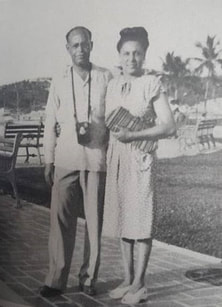
Het verhaal van Otto en zijn vrouw Hermina “Hermie” Huiswoud, biedt kans om mensen te verbinden en kennis te delen over het verborgen verleden van zwarte mensen in de Nederlandse geschiedenis en in een internationale context.
Otto Huiswoud was namelijk de zoon van een tot slaaf gemaakte Afrikaan. Op 16-jarige leeftijd vertrok hij met de boot naar Nederland, hij zou deze eindbestemming echter niet direct bereiken omdat hij in New York aan wal trad. In New York kwam hij terecht in politieke en intellectuele kringen, en groeide hij uit tot een sociaal maatschappelijk leider. Hij was de enige zwarte medeoprichter van de Communist Party of America en werd onderdeel van de vroege burgerrechtenbeweging die zich inzette voor gelijke kansen voor zwarte Amerikanen. Ook Hermina was actief in verschillende socialistische en communistische netwerken. Tijdens de Tweede Wereldoorlog verhuisde Otto Huiswoud wegens gezondheidsredenen naar Suriname. Hier werd hij echter als vijand van de staat gezien en tezamen met nazi’s voor een jaar gevangen gezet.
Na de oorlog migreerden de Huiswouds naar Nederland waar Otto Huiswoud zich als lid en later als voorzitter bleef inzetten voor de emancipatie van zwarte mensen en Surinamers door zijn internationale contacten met het groeiende verzet in Nederland te verbinden. In de collectie van “the Black Archives” zijn dan ook unieke documenten, boeken en objecten te vinden zoals originele krantenartikelen en magazines uit de jaren ‘50 en ‘60 over Martin Luther King Jr. en de burgerrechtenbeweging, gesigneerde boeken van o.a. Langston Hughes en brieven en telegrammen tussen VOS en verschillende internationale studenten- en emancipatiebewegingen.
Otto Huiswoud was namelijk de zoon van een tot slaaf gemaakte Afrikaan. Op 16-jarige leeftijd vertrok hij met de boot naar Nederland, hij zou deze eindbestemming echter niet direct bereiken omdat hij in New York aan wal trad. In New York kwam hij terecht in politieke en intellectuele kringen, en groeide hij uit tot een sociaal maatschappelijk leider. Hij was de enige zwarte medeoprichter van de Communist Party of America en werd onderdeel van de vroege burgerrechtenbeweging die zich inzette voor gelijke kansen voor zwarte Amerikanen. Ook Hermina was actief in verschillende socialistische en communistische netwerken. Tijdens de Tweede Wereldoorlog verhuisde Otto Huiswoud wegens gezondheidsredenen naar Suriname. Hier werd hij echter als vijand van de staat gezien en tezamen met nazi’s voor een jaar gevangen gezet.
Na de oorlog migreerden de Huiswouds naar Nederland waar Otto Huiswoud zich als lid en later als voorzitter bleef inzetten voor de emancipatie van zwarte mensen en Surinamers door zijn internationale contacten met het groeiende verzet in Nederland te verbinden. In de collectie van “the Black Archives” zijn dan ook unieke documenten, boeken en objecten te vinden zoals originele krantenartikelen en magazines uit de jaren ‘50 en ‘60 over Martin Luther King Jr. en de burgerrechtenbeweging, gesigneerde boeken van o.a. Langston Hughes en brieven en telegrammen tussen VOS en verschillende internationale studenten- en emancipatiebewegingen.
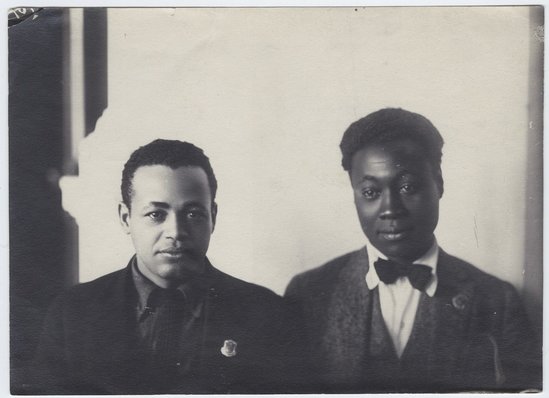
Otto Huiswoud & Claude McKay in Moskou (1922)
Otto en Hermine Huiswoud behoorden tot een generatie antikoloniale denkers, leiders en organisatoren die actief waren in de strijd tegen Europees en Amerikaans imperialisme. Ze waren lid van een internationaal anti-imperialistisch netwerk dat onder meer via de Internationale Communisten (Comintern) contact onderhield om op basis van Marxistisch-Leninistische ideologie revolutionair verzet te organiseren. De Huiswoud’s behoren tezamen met George Padmore, C.L.R. James en Aimé Césaire tot de eerste generatie Caribische Marxisten, waar Franz Fanon ondanks zijn jongere leeftijd ook toe gerekend kan worden. Zo werkte Huiswoud als redacteur van ‘the Negro Worker” en was hij tezamen met George Padmore actief bij de International Trade Union for Negro Workers in de jaren ’30.
De Huiswouds zagen vanuit dit gedachtegoed de strijd tegen racisme en imperialisme als onlosmakelijk verbonden met de strijd tegen klassisme en kapitalisme, en de strijd van onderdrukte groepen in het Caraïbische gebied zagen ze als onlosmakelijk verbonden met de strijd voor vrijheid en onafhankelijk van gekoloniseerde landen in Afrika, Azië en andere delen van de wereld. Zo was Otto Huiswoud betrokken bij het organiseren van een solidariteitsactie rondom de moord op Patrice Lumumba in januari 1961. Over Fanon, Padmore, en C.L.R. James en andere zwarte revolutionaire intellectuelen en leiders is er veel geschreven en nagedacht. Het verhaal van Otto en Hermine Huiswoud is voor velen echter nog onbekend.
NUC heeft een deel van de persoonlijke collectie aan boeken en documenten van Otto en Hermie Huiswoud in the Black Archives. Wij doen momenteel onderzoek naar hun leven en beogen het archief in 2017 toegankelijk te maken.
Openingstijden/Opening TimesWoensdag/Wednesday 11.00 - 17.00 uur
Donderdag/Thursday 11.00 - 17.00 uur Vrijdag/Friday 11.00 - 17.00 uur Zaterdag/Saturday 11.00 - 17.00 uur Onze nieuwe locatie in Amsterdam Zuidoost is geopend. Neem contact op via de pagina contact voor rondleidingen buiten het programma. We moved to South East Amsterdam. Contact us via the page contact for tours outside our program. |
(Rolstoel)toegankelijkheid/Accessibility
Momenteel beschikt The Black Archives niet over een speciale ingang en lift voor personen met een fysieke beperking en voor rolstoelgebruikers.
At this moment, The Black Archives does not have a special entrance or lift for person of disability. |